24X7 Emergency : +91-7830300210 Toll Free No: 1800-202-5100








×
Need help finding what you were looking for?
Get a call back from our Health advisor
By clicking, you agree to our Privacy Policy,
Terms of Use & Disclaimer
📞 Call: +91-7830300210
✉️ Email: info@nivokhospitals.com
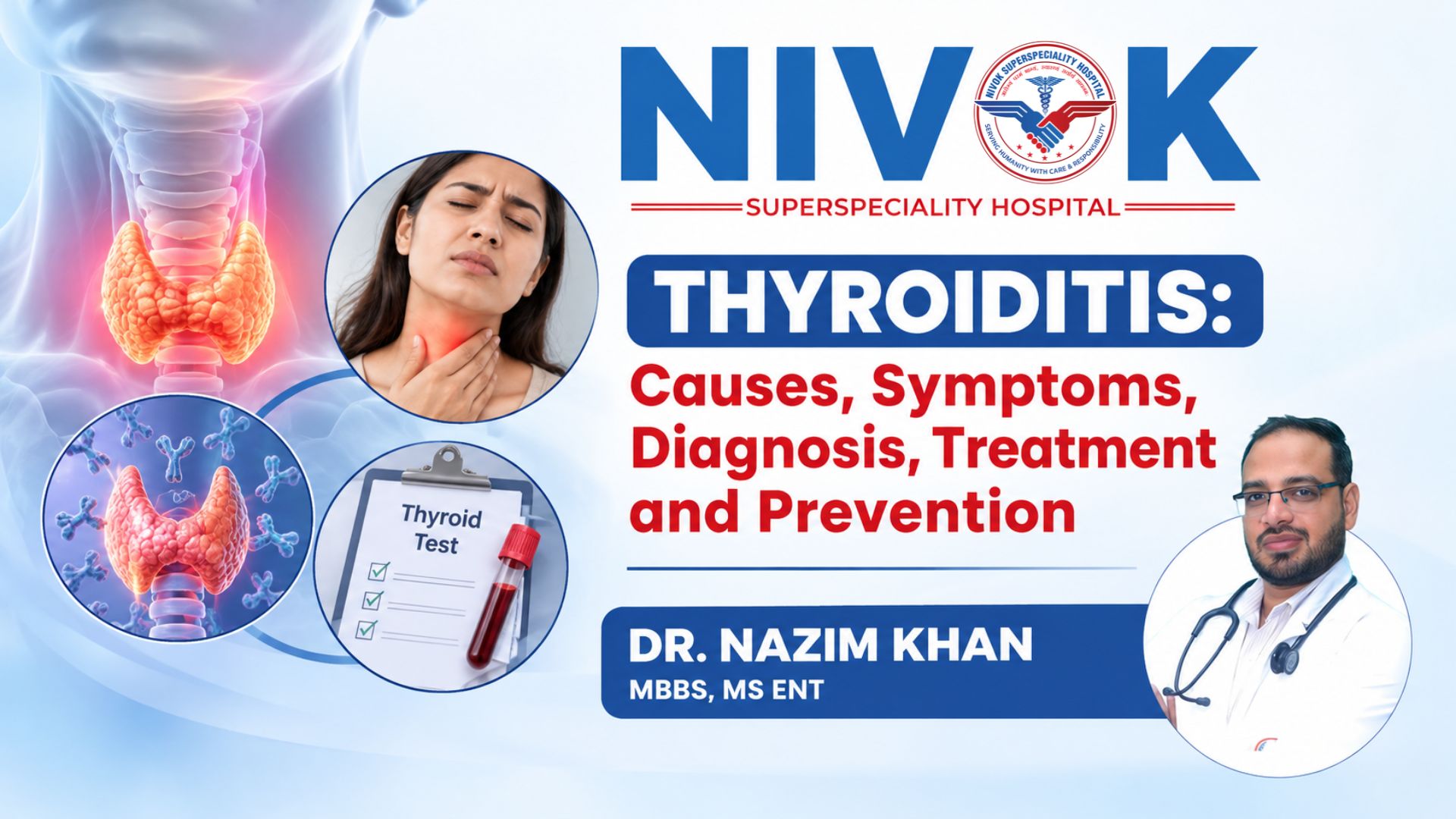
THYROIDITIS: Causes, Symptoms, Diagnosis, Treatment and Prevention
Your thyroid is a small, butterfly-shaped gland sitting at the base of your neck, and it quietly runs a surprising number of things. Heart rate, body temperature, energy, weight, mood, even how fast you digest food. When it gets inflamed, those settings can swing wildly, first one way and then the other. That inflammation has a name, thyroiditis, and it’s more common than most people realise, particularly in women. This guide explains what causes it, how it shows up, how doctors confirm it and what can be done.
What Does the Thyroid Actually Do?
The thyroid makes hormones, mainly T3 and T4, that act like a control dial for the body’s metabolism. A brain gland called the pituitary keeps watch through a hormone named TSH. If thyroid hormone drops, TSH rises to push the gland harder. If hormone levels climb too high, TSH falls.
When the gland is inflamed, it may leak stored hormone into the blood, or lose its ability to make enough. That’s why symptoms can flip from “too much” to “too little” over weeks or months.
Types You Should Know About
Inflammation of the thyroid isn’t a single disease. There are several forms, and each behaves differently.
- Hashimoto’s disease: The most common form. The immune system attacks the thyroid slowly, often leading to long term underactivity.
- Subacute (de Quervain’s): Often follows a viral infection, causes a painful, tender neck and usually settles on its own with time.
- Postpartum: Appears within the first year after childbirth, often starting with an overactive phase followed by an underactive one.
- Silent (painless): Similar to the postpartum form but unrelated to pregnancy, with no neck pain.
- Drug-induced: Triggered by certain medicines, including amiodarone, interferon, lithium and some cancer immunotherapies.
- Radiation-induced: Seen after radiation to the neck or radioactive iodine treatment.
- Acute infectious: Rare, caused by bacteria or fungi, with fever and severe pain.
What Causes It?
The cause depends on the type, but the main triggers include:
- An autoimmune reaction where the body’s defences target thyroid tissue
- Viral infections, especially in the subacute form
- Pregnancy and the changes after delivery
- Certain medications
- Radiation exposure to the neck
- Family history of thyroid or other autoimmune diseases
- Excess iodine intake in sensitive people
Women are affected far more often than men, and the risk rises with age and with other autoimmune conditions like type 1 diabetes, celiac disease or rheumatoid arthritis.
Symptoms: A Two-Faced Condition
This is where things get confusing. Symptoms depend on whether the gland is releasing too much hormone or too little.
Popular Posts

.jpg)







.jpg)

.jpg)







.png)
.jpg)
Copyrights © 2025 All Rights Reserved, Powered by Your Reputations Consulting
