24X7 Emergency : +91-7830300210 Toll Free No: 1800-202-5100







×
Need help finding what you were looking for?
Get a call back from our Health advisor
By clicking, you agree to our Privacy Policy,
Terms of Use & Disclaimer
📞 Call: +91-7830300210
✉️ Email: info@nivokhospitals.com
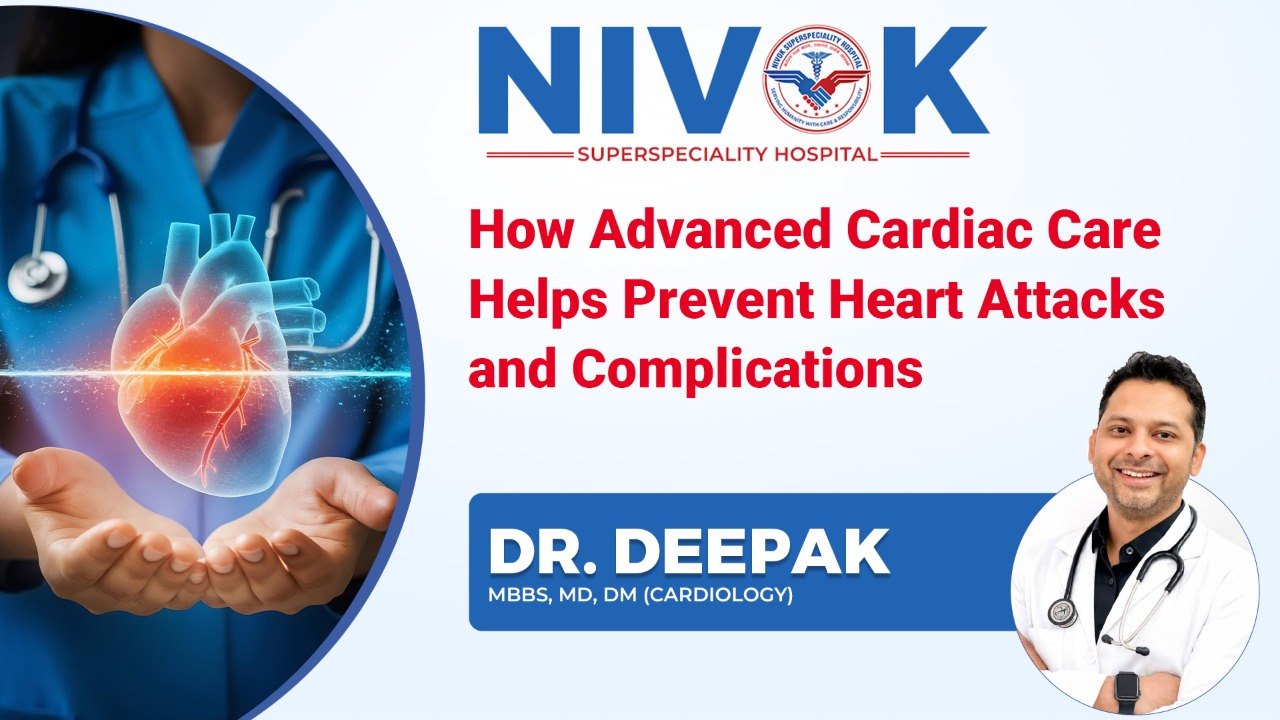
How Advanced Cardiac Care Helps Prevent Heart Attacks and Complications
Heart disease doesn't knock once and leave. It creeps in slowly, hiding behind years of small decisions nobody thinks twice about, a missed walk here, an extra samosa there, blood pressure readings brushed off as "just stress". By the time someone actually feels something wrong, the damage has usually been building for a while. So the real question isn't how to treat a heart attack after it happens. It's how to stop one from happening at all. That's where advanced cardiac care earns its weight.
What's Actually Driving the Risk?
A heart attack rarely has one cause. It's almost always a pile-up: high blood pressure, bad cholesterol numbers, diabetes, extra weight, smoking, stress that never lets up. Most people are juggling two or three of these without even clocking how much pressure it's putting on their heart. Cardiac care that actually works starts before symptoms show up. Blood pressure checks, lipid profiles, sugar levels, and a look at family history all of it paints a picture of where someone stands. Why wait for a crisis to find out what a simple test could've told you months ago?
Catching Problems Early With the Right Tests
This is where diagnostics change the game. An ECG, an echocardiogram, a stress test, sometimes a coronary angiography. These tests show exactly how the heart is performing and whether the arteries are carrying blood the way they should. A blockage sitting quietly for years can get flagged and treated long before it turns into an emergency. Reading these results correctly takes real experience though, and that's something Dr. Deepak brings to the table, spotting subtle warning signs that a less trained eye might miss entirely.
Blood Pressure: The Quiet Troublemaker
Hypertension doesn't shout. It just sits there, slowly straining the heart, thickening vessel walls, setting the stage for a stroke or heart failure down the line. No symptoms, no warning, just gradual wear. Advanced cardiac care treats this seriously, combining medication with diet changes and consistent monitoring over months, not just one reading taken on a random Tuesday. Dr. Deepak's approach leans into tracking patterns over time. One number means nothing. A trend means everything.
Cholesterol and the Arteries: Quietly Clogging?
Here's something a lot of people don't realise: cholesterol buildup is one of the most direct paths to a heart attack. LDL cholesterol piles up along artery walls, forms plaques, and narrows the passage that blood needs to flow through. And when one of those plaques ruptures? That's when a clot forms and blocks everything. Sudden, dangerous, and often fatal if untreated. Managing this means medication, yes, but also watching what goes on the plate and checking lipid levels regularly enough to know if treatment is actually working or needs tweaking.
Lifestyle Changes That Genuinely Move the Needle
Medicines only do half the job. The other half? That's lifestyle, and it matters just as much, sometimes more. Diet, movement, sleep, and stress all of it feeds directly into heart health. Advanced cardiac care isn't just writing a prescription and sending someone home. It's building habits that stick, exercise plans suited to where a patient actually is fitness-wise, dietary tweaks that cut sodium and saturated fat without making food feel like punishment, and stress management for anyone whose job or home life keeps their cortisol on overdrive. Dr. Deepak often points out that consistent lifestyle changes can rival medication in cutting long-term cardiac risk. Skip them, and even the best pills only do so much.
Diabetes and the Heart Are Tied Together Tighter Than You'd Think
Uncontrolled blood sugar doesn't just affect diabetes; it directly damages blood vessels, making them far more prone to plaque buildup and far less efficient at doing their job. Treating heart issues without addressing blood sugar is like fixing one leak while ignoring the other. Doctors need to watch HbA1c levels alongside cardiac markers, adjusting both treatment plans together rather than in silos. That combined approach tends to produce far better outcomes than treating each condition like it exists on its own.
After a Cardiac Event, the Work Isn't Done
Survived a heart attack? The job's only half finished. Patients recovering from cardiac events face a real risk of a second episode within months, which is exactly why structured rehab, strict medication adherence, and ongoing monitoring matter so much during recovery. Skipping follow-ups because symptoms feel better is one of the riskiest things a recovering patient can do.
Why Waiting Is the Biggest Mistake
Here's the pattern that shows up again and again. People wait. They wait until chest pain becomes impossible to ignore, until breathlessness stops them mid-sentence, until something forces their hand. By then, treatment options shrink, and complications multiply. Regular cardiac checkups, especially for anyone with a family history, diabetes, high blood pressure, or weight-related risk factors, catch problems while they're still manageable. Why does early consultation matter so much? Because it's not just about treating what's already wrong. It's about building a relationship with a specialist who actually knows your cardiac history and can track how things shift over time.
At Nivok Superspeciality Hospital in Modinagar, Dr. Deepak leads cardiac care built around early detection, personalised risk management, and consistent follow-up, whether someone's managing risk factors for the first time or recovering after an event. The hospital pairs detailed diagnostics with practical, real-world lifestyle guidance, addressing both the immediate concern and the years ahead. Anyone carrying risk factors for heart disease, or sitting with a family history they can't ignore, would do well to book that consultation now rather than waiting for a wake-up call they don't want.
Popular Posts

.jpg)







.jpg)

.jpg)


















Copyrights © 2025 All Rights Reserved, Powered by Your Reputations Consulting
