24X7 Emergency : +91-7830300210 Toll Free No: 1800-202-5100






×
Need help finding what you were looking for?
Get a call back from our Health advisor
By clicking, you agree to our Privacy Policy,
Terms of Use & Disclaimer
📞 Call: +91-7830300210
✉️ Email: info@nivokhospitals.com
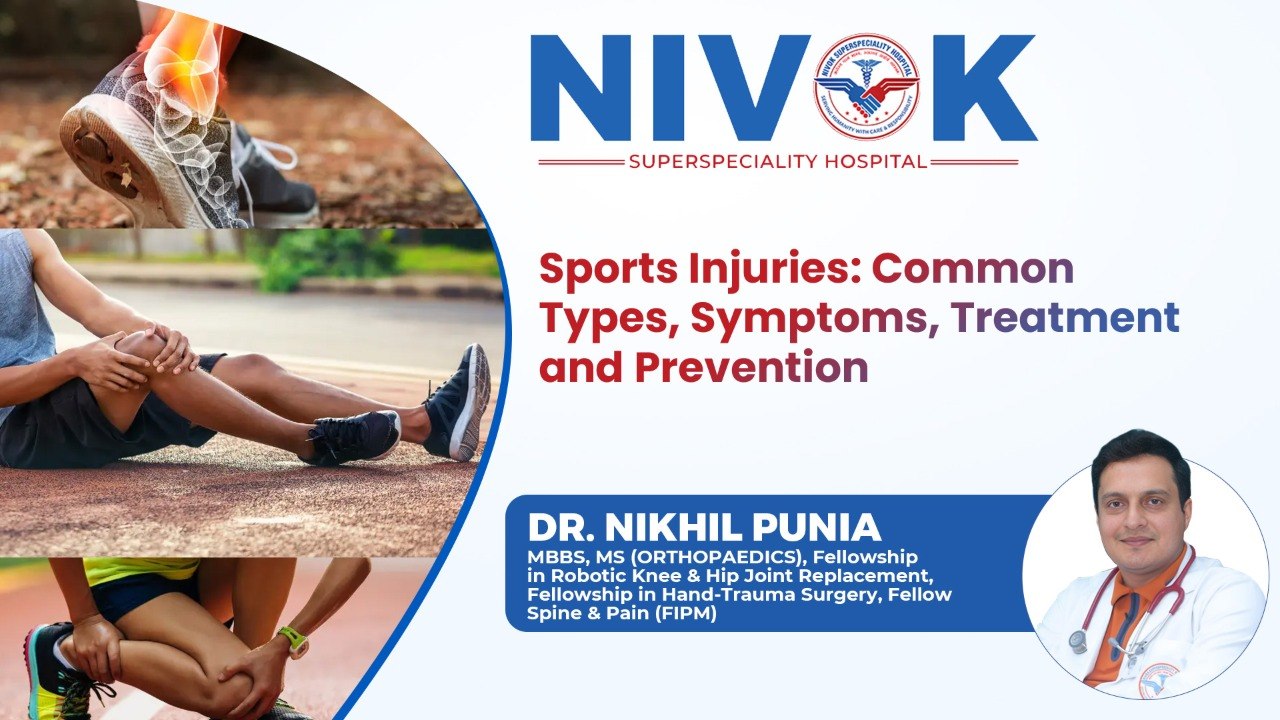
Sports Injuries: Common Types, Symptoms, Treatment and Prevention
Rolled your ankle mid-match on a Sunday? Felt something pull awkwardly in your knee after one extra rep? These moments happen more often than most people admit, and what you do in the first day or two after often determines whether you're training again next week or nursing a problem for months.
Our orthopaedic team at Nivok Superspeciality Hospital watches this scenario unfold repeatedly — a small ache gets brushed off, and weeks later it's become a persistent issue that's harder to fix. Let's walk through what triggers these injuries, the warning signs worth taking seriously, and what real treatment and prevention involve.
What Causes Sports Injuries
Strip away the jargon, and sports injuries usually trace back to a few recurring habits:
- Explosive movement attempted without a real warm-up
- Overuse — the same joint or muscle group taking repeated strain until something gives
- Faulty technique or bad posture during play or training
- Worn-out gear that no longer offers proper support
- Weak stabiliser muscles around a major joint
None of this is rare. It's ordinary, avoidable stuff, which is why these injuries show up so often, even in people who train sensibly.
The Injuries We See Most
Treatment depends heavily on what's actually damaged, so lumping every injury together does nobody any favours.
Sprains and Strains A sprain involves a stretched or torn ligament; a strain is the muscle or tendon equivalent. Twisted ankles and pulled hamstrings account for a large share of our orthopaedic consultations.
Fractures A stress fracture building up gradually in a runner looks nothing like a sudden break from a fall or collision on the field — yet both require proper imaging before anyone can rule out complications.
Dislocations Shoulders and fingers slip out of joint often enough in contact sports to be a familiar complaint. It looks alarming, hurts immediately, and needs a doctor's hands — never your own.
Knee Injuries ACL tears, meniscus damage, and general "runner's knee" show up constantly among footballers and basketball players, largely because knees absorb so much force during sudden pivots and landings.
Tendinitis: This one creeps in slowly through overuse — tennis elbow, jumper's knee, Achilles tendinitis — building over weeks rather than announcing itself in a single dramatic moment.
Symptoms That Deserve Attention
Pain alone is easy to spot, but these signs mean you should book an appointment instead of waiting it out:
- Swelling that hasn't eased after a day or two
- A joint that looks visibly out of shape or misaligned
- Difficulty putting weight on the limb or using it normally
- A distinct pop or tearing feeling right when it happened
- Stiffness that lingers and keeps cutting into your range of motion
Recognise two or three of these? Skip the painkiller-and-wait approach and get it examined properly.
How Treatment Is Actually Approached
There's no single formula here, which is why seeing the right specialist matters so much. Dr. Nikhil Punia specialises in evaluating and managing sports injuries, handling everything from routine sprains to more involved ligament repair work.
Based on how serious the injury is, care generally includes:
- RICE (Rest, Ice, Compression, Elevation) for milder, acute cases
- Structured physiotherapy to rebuild strength and mobility step by step
- Bracing or immobilisation for moderate tendon or ligament tears
- Arthroscopic surgery when ACLs, menisci, or joints need direct repair
- A supervised, gradual return to sport so the injury doesn't resurface
Going back into full activity too soon remains one of the most common mistakes athletes make, and it almost always makes things worse the second time around.
Prevention Nobody Wants to Bother With
Here's the thing — most of these injuries are avoidable, and prevention isn't complicated:
- Spend five minutes on dynamic stretching before intense activity
- Build strength in the muscles that support your knees and shoulders
- Wear footwear actually suited to your sport, not just whatever's comfortable
- Treat small aches as early signals instead of ignoring them
- Schedule genuine rest days instead of training through exhaustion
Where to Turn for Proper Orthopaedic Care
A sports injury shouldn't have to end your fitness goals or competitive plans, as long as it's diagnosed accurately and treated with a plan built around your specific sport and body. If you've been searching for the best orthopaedic hospital in Modinagar, Nivok Superspeciality Hospital combines specialist orthopaedic care with the diagnostic facilities needed to get it right the first time.
Patients living in Muradnagar and nearby localities regularly choose us for orthopaedic consultations, physiotherapy, and surgical intervention when it's genuinely warranted. Whether it's an ankle sprain refusing to heal or a knee injury that needs surgical correction, acting early gives you the best shot at a complete, lasting recovery.
Popular Posts

.jpg)





.jpg)
.jpg)









Copyrights © 2025 All Rights Reserved, Powered by Your Reputations Consulting
