24X7 Emergency : +91-7830300210 Toll Free No: 1800-202-5100






×
Need help finding what you were looking for?
Get a call back from our Health advisor
By clicking, you agree to our Privacy Policy,
Terms of Use & Disclaimer
📞 Call: +91-7830300210
✉️ Email: info@nivokhospitals.com
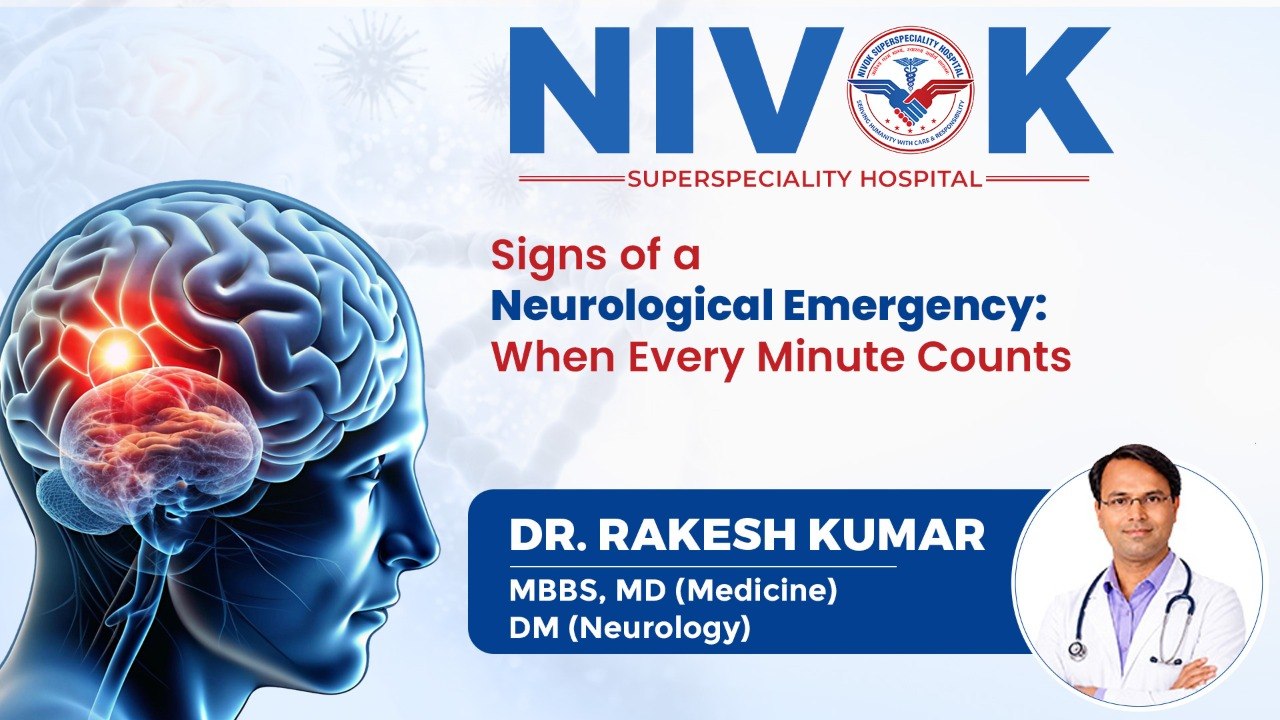
Signs of a Neurological Emergency: When Every Minute Counts
Ever noticed how the brain just quietly does its job until, suddenly, it doesn't? No warning bell, no dramatic buildup. One moment everything's normal, the next someone's slurring their words or can't lift an arm. That's the scary part about neurological emergencies.
At Nivok Superspeciality Hospital, this urgency isn't just something the doctors talk about in passing. It shapes how the entire emergency team operates, because when it comes to strokes or sudden brain trauma, hesitation is the enemy.
So Why Does Every Minute Actually Matter?
Here's the thing nobody tells you plainly enough: neurons start dying almost immediately once blood flow to the brain gets interrupted. Not in an hour. Not after breakfast. Immediately. Ischemic strokes in particular come with a brutally short treatment window, often just a handful of hours from when symptoms first show up. Miss that window, and options shrink fast. The doctors at Nivok Superspeciality Hospital see this pattern repeatedly. Patients who arrive within that golden window walk away with far better recovery odds than those who waited it out at home hoping things would settle.
Would you wait to call a fire truck if you smelled smoke in your kitchen? Probably not. Yet somehow, when it comes to our own bodies, we love to play the waiting game.
Warning Signs Nobody Should Ignore
Some symptoms are loud. Others whisper. Either way, pay attention:
- Sudden numbness or weakness, especially if it's just on one side of the body
- Slurred speech or trouble following a conversation
- Vision suddenly going blurry or blacking out in one eye
- Losing balance out of nowhere, or walking like the floor is tilted
- A headache so brutal it feels unlike anything experienced before
- A first-time seizure with zero prior history
- Sudden unresponsiveness or a confusing change in alertness
Even one of these popping up is reason enough to move, not to sit around debating whether it's "probably nothing."
A Quick Trick Worth Remembering: FAST
- Face: is one side drooping?
- Arms: can they both be raised evenly, or does one drift down?
- Speech: does it sound slurred or strange?
- Time: don't wait; call for help right away
Takes under a minute to check. Could save someone's entire future.
What Actually Happens Once You're at the Hospital
The moment a patient walks or gets wheeled into Nivok Superspeciality Hospital with these symptoms, the emergency and neurology teams move together, not in sequence, but in parallel. Scans happen fast. Vitals get checked immediately. There's no lingering in a waiting room hoping someone notices you. Nivok Superspeciality Hospital is designed for quick response, with 24/7 imaging, lab access, and a team that values time.
What Dr. Rakesh Kumar Wants People to Understand
Dr. Rakesh Kumar often points out that families tend to downplay early symptoms. A brief slur in speech, a hand that felt oddly weak for a minute, these get brushed off as tiredness or stress far too often. But according to Dr. Rakesh Kumar, that dismissiveness is exactly what turns a treatable situation into a devastating one. His advice is blunt and simple: if something feels neurologically off, even briefly, get it checked. Don't negotiate with your own symptoms.
Reducing the Risk Before It Becomes an Emergency
Nobody can predict every neurological crisis, but plenty of the risk can be managed ahead of time:
- Keeping blood pressure under control
- Managing diabetes consistently rather than occasionally
- Watching cholesterol levels instead of ignoring them
- Getting regular checkups, especially for anyone with a family history
Routine visits to hospital give patients with these risk factors a way to stay ahead of trouble instead of reacting to it after the fact.
The Bottom Line
Neurological emergencies rarely give a heads-up. They show up quietly, disguised as something forgettable, like a stumble, a strange word slip, or a headache that seems bad but not "that" bad. That subtlety is exactly why awareness matters so much. Nivok Superspeciality Hospital stays prepared for these moments precisely because they tend to arrive without warning, and when they do, having a team ready to move fast can be the difference between a full recovery and a lifelong setback.
Popular Posts

.jpg)





.jpg)
.jpg)












Copyrights © 2025 All Rights Reserved, Powered by Your Reputations Consulting
